
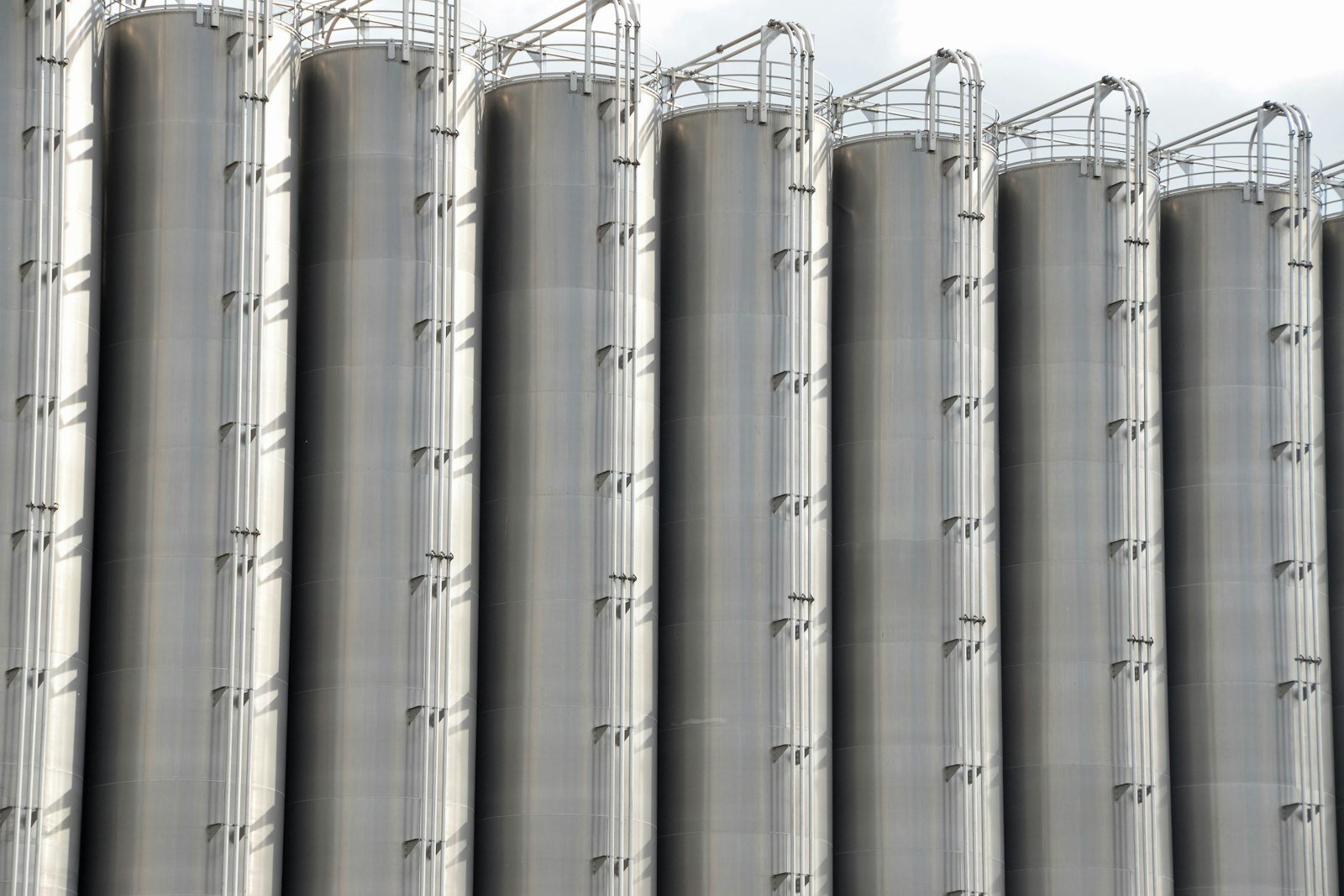
Distilleries where every liter in is accounted for on the way out.
Mashing, distillation, condensing and cleaning make water and steam part of the product. Aqueduct meters every flow, closes the water and thermal balance, and keeps the zero liquid discharge record continuous.
What distilleries and breweries teams are up against.
Water, energy, air and operations carry equal weight. Each one runs the same loop: monitor, measure, identify, act, verify.
Water: Condensers and cooling towers
Clean water to drain from low tower cycles
Energy: Stills and the boiler house
Lost condensate, so fuel is burned twice
Air: Spent wash evaporation
Evaporators running on steam the plant wasted
Operations: Cleaning cycles
Vessels cleaned on a timer, batch or no batch
Problem, solution, impact.
How Aqueduct resolves each problem for distilleries and breweries, and what changes when it does.
Clean water to drain from low tower cycles
A live water balance across meters and sub-meters localizes the loss, routes the fix and confirms it closed at the meter.
Loss found from the balance, not the bill, and every fix verified.
Lost condensate, so fuel is burned twice
Weather-normalized baselines per building and asset show the waste in money; schedules and setpoints adjust where control is enabled.
Savings stated in money and confirmed at the meter, not estimated.
Evaporators running on steam the plant wasted
Air quality per zone, overlaid with occupancy, with ventilation raised when it matters and verified back in range.
Targets held during occupied hours, with the energy cost counted.
Vessels cleaned on a timer, batch or no batch
Faults diagnosed in plain language and routed into your CMMS with the fix; early signs of failure schedule maintenance first.
Fewer reactive call-outs and closures confirmed by the equipment.
One incident, from first signal to verified fix.
An illustrative example of the flywheel on a typical site.
Each stage metered, from mash tun to evaporator.
A balance per batch and line.
Still house condensate return falling for a week.
Ticket naming the trap bank and the loss.
Return ratio restored. Fuel and make-up saving priced.
Four connected products on one data layer.
Replace what should be replaced. Connect the rest.
- Utility monitoring
- EMS
- Leak and balance tools
- CMMS
- Plant SCADA and historians, read only
- ERP for cost allocation
Three equal ways in: keep your BMS, replace it, or build Aqueduct in at design stage.
The questions each seat asks first.
“Where is the water and steam going, batch by batch?”
“Can I show the board the ZLD balance closes?”
“Is the condensate coming back?”
Where the spirit’s water and steam go.
of spent wash per KL of alcohol at Ganga basin molasses distilleries in 2021 to 22, from 11.1 KL in 2016 to 17.
Source: Indian Forestergain in Scotch whisky water use efficiency reported in 2021.
Source: Scotch Whisky Associationof steam traps may fail in systems left unmaintained for 3 to 5 years.
Source: US DOE Steam Tip SheetTargets that need a closed balance.
Responsible water use range
Scotch producers aimed to bring every site inside a responsible range by 2025, with net zero for own operations by 2040.
ZLD under the CPCB charter
Ganga basin molasses distilleries reached zero liquid discharge. Keeping it means a balance that closes every day.
Sources3 references cited on this page
Proven in live sites across sectors.
Anonymized results from live sites.
sites in 21 countries run on Aqueduct.
and 9 clinics in one of India’s top hospital chains.
US airport running water intelligence on Aqueduct.
of commercial real estate under Aqueduct.
Features that matter here
Common questions
Every liter of condensate not returned to the boiler is replaced with treated make-up water and heated from cold. One ratio therefore carries both a water loss and a fuel loss, so Aqueduct tracks it next to steam flow and boiler fuel use.
Yes. A brewery runs the same utilities in a different order: hot liquor, wort cooling, cleaning and packaging. Aqueduct measures water, steam and power at each of those steps, so a loss shows up against the step that caused it rather than in one site total.
Yes, by supplying the measured volumes. Aqueduct meters effluent and spent wash flows next to production, so volume per unit of spirit can be tracked month by month. The distillery still prepares and files its own returns to the regulator.
See Aqueduct on your own facility.
Bring a site, a utility bill or a question. We will show you where the loss is.