
LoRaWAN air quality sensors for every occupied zone
An air quality sensor measures conditions such as CO2, VOC, PM2.5, temperature and humidity in the zone it covers. Aqueduct reads them over LoRaWAN or IP and judges each reading against occupancy.
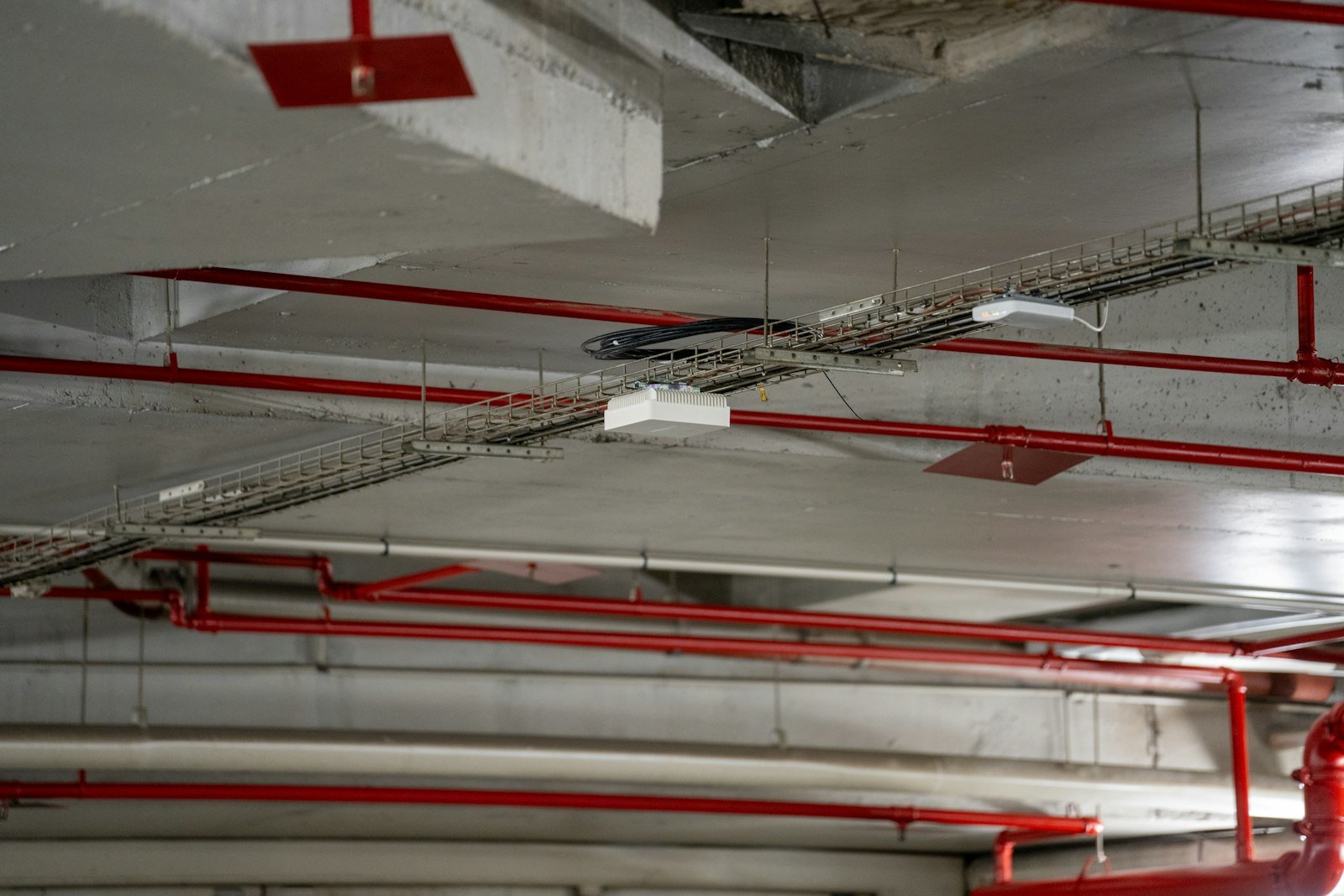
Measure the air people actually breathe, zone by zone.
One sensor per zone, at breathing height
- Meeting rooms and classrooms
Dense rooms where CO2 climbs fastest.
- Open floors and lobbies
Zones sized to each sensor's coverage radius.
- Garages, kitchens and restrooms
CO, odor and specialized gases where a source exists.
What the readings let a team decide
- Ventilation
CO2 sustained in an occupied zone shows where fresh air falls short.
- Cleaning and fit-outs
VOC peaks separate a cleaning event from a persistent source.
- Wildfire and traffic days
Outdoor PM readings tell the team when to limit outside air.
Sensor bundles and data points
| Bundle | Data points |
|---|---|
| Comfort | Temperature, humidity, and optionally CO2, PIR occupancy and sound level. |
| Air quality basic | Temperature, humidity, CO2, VOC, pressure, PM2.5 and PM10. |
| Vaping | The basic set plus smoking and e-cigarette emissions. |
| Specialized gases | The basic set plus CO, formaldehyde, SO2, NO2, O3, H2S, NH3 or radon. |
| Outdoor | O3, CO, SO2, NO2, PM2.5 and PM10, or a weather station. |
Rules that now ask for CO2 data
England expects new non-domestic buildings to provide a means of monitoring indoor air, such as CO2 monitors.
Source: UK Approved Document FCO2 alert threshold for classroom monitors funded by California's CalSHAPE program.
Source: California Energy CommissionHow much higher some pollutants run indoors than outdoors.
Source: US EPADevice agnostic, with leading manufacturers.
Exact make and model are selected per site. These are some of the manufacturers and standards Aqueduct works with.






sites in 21 countries run on Aqueduct.
and 9 clinics in one of India’s top hospital chains.
US airport running water intelligence on Aqueduct.
of commercial real estate under Aqueduct.
FMCG manufacturing campus.
operations run on Aqueduct.





Related
Common questions
Battery air quality sensors usually report every 5 to 60 minutes, set per site to balance time resolution against battery life. Meeting rooms and classrooms often use shorter intervals because CO2 climbs fastest there. See CO2 monitoring.
No. Sound sensors report only minimum, maximum and average decibel levels for the zone, never audio. That is enough to spot a noisy plant room or a crowded space without capturing what anyone says. See restroom monitoring.
Yes. A vaping sensor bundle detects smoking and e-cigarette emissions in restrooms and stairwells, and Aqueduct raises an alert for that zone with the time of the event. No cameras are involved. See IAQ monitoring.
At breathing height in the occupied zone, away from doors, windows and supply diffusers that would dilute the reading. One sensor covers one zone, so large open floors get several. See aQ AirSafe.
See Aqueduct on your own facility.
Bring a site, a utility bill or a question. We will show you where the loss is.