What is a smart building platform
 Milvian AI teamFacilities and infrastructure intelligence
A smart building platform collects data from controls, meters and sensors across buildings, models what it means and acts on it. A BMS controls equipment in one building; the platform sits above many.
A slippery term
Vendors use "smart building platform" for very different products: a dashboard of IoT sensors, an analytics layer on a BMS, a tenant app or a digital twin. The useful definition is functional: a platform collects data from many systems, models the physical building behind the data, finds what is wrong, acts or routes the fix, and proves the result.
The need is large. Buildings and construction use 32 percent of global energy and produce 34 percent of CO2 emissions, according to UNEP, and ENERGY STAR estimates 30 percent or more of the energy used in commercial buildings is often wasted.
Platform vs BMS
| BMS | Smart building platform | |
|---|---|---|
| Scope. | Equipment in one building. | Many systems across many buildings. |
| Data. | Controller points and short trends. | Controls, meters, sensors and bills, kept long term. |
| Output. | Schedules, setpoints, alarms. | Baselines, diagnoses, rankings, actions and reports. |
| User. | Building engineer. | Engineers, managers, finance and sustainability. |
What the ideal platform must do
| Requirement | Why it matters here | Ask the vendor |
|---|---|---|
| Model the physical system. | Data without a model cannot locate a loss. | Show the model behind a water or energy balance. |
| Baseline against weather. | Savings claims need a fair comparison. | How is expected use calculated? |
| Act with governance. | Insight alone changes nothing. | How are commands approved and recorded? |
| Show data health. | Bad sensors produce bad decisions. | Can I see connection and battery status per device? |
Where platforms are heading
Fault detection and diagnostics delivered median savings of 9 percent in DOE's Smart Energy Analytics Campaign, against 4 percent for energy information systems, which is why platforms are moving from showing data to acting on it. Plain-language assistants are the next step, letting an operator ask about a site instead of navigating trends.
How to tell a real platform from a dashboard
- Ask for the modelA real platform shows the system behind the numbers.
- Ask for a fixFollow a finding into a work order or command.
- Ask for the proofSee a saving measured against a baseline.
- Ask for an exportYour data should leave with you.
Where Aqueduct fits
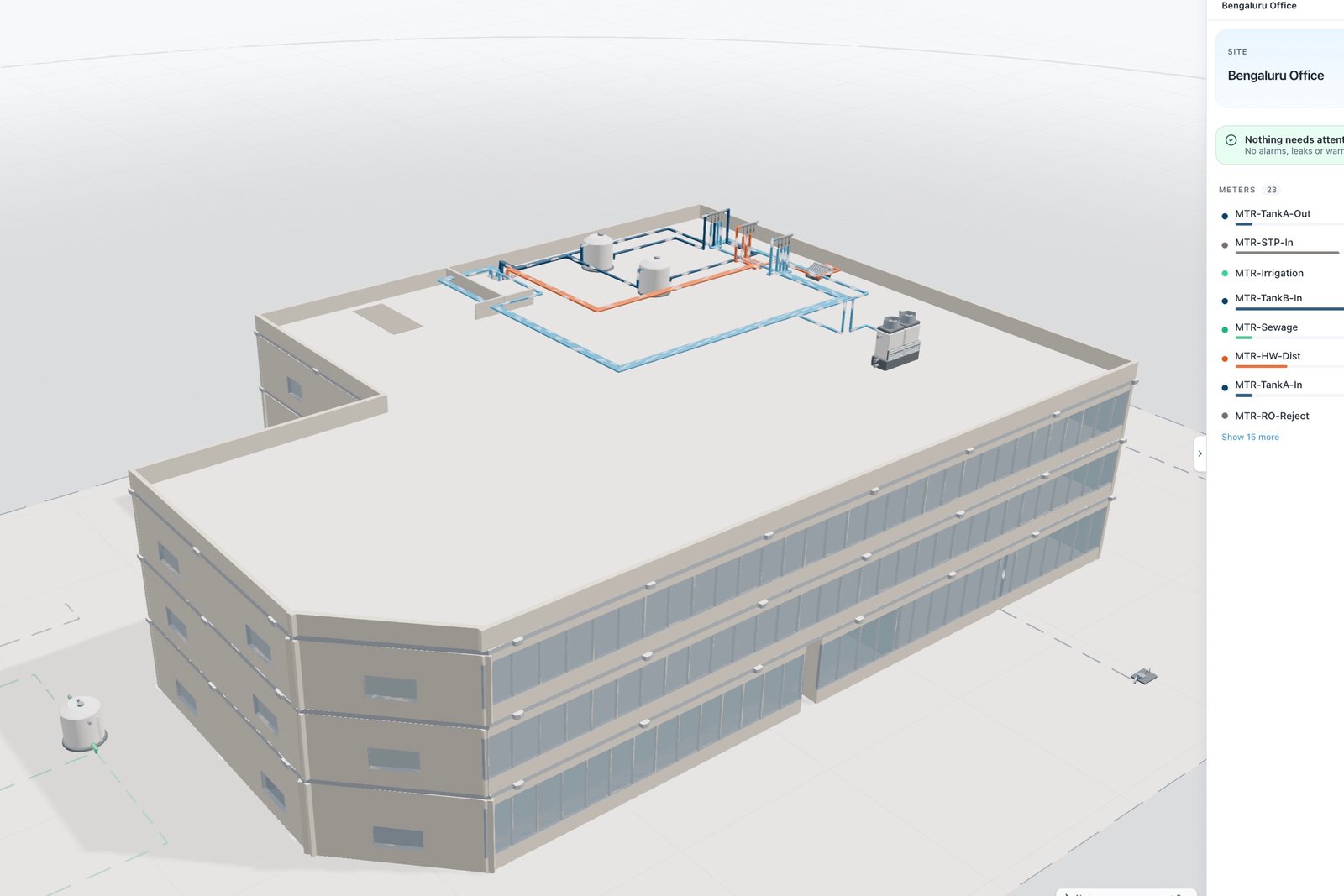
Aqueduct is a facility intelligence platform. aQ Core holds sites, floors, zones and devices; live twins model the water balance, the electrical single line and each rooftop unit; baselines use bills and degree days; and Smart Controls acts where control is enabled, with owner approval. aQ Assistant answers plain-language questions from live site data.
Sources
| Source | Link |
|---|---|
| UNEP GlobalABC, Global Status Report for Buildings and Construction 2024/2025 | unep.org |
| ENERGY STAR, About ENERGY STAR for buildings | energystar.gov |
| US DOE, Smart Energy Analytics Campaign | energy.gov |