What is Milvian AI, and what is Aqueduct?
 Kishore PotruCo-Founder and CEO, Milvian AI
Milvian AI is the company. Aqueduct (aQ) is its facility intelligence platform: it shows what is happening across a facility's water, energy, air and equipment, then helps the team act on it and measure the result.
The question nobody in the building can answer
Ask the people who run a hospital, an office tower or a dairy plant how much water the site lost last night, and where. Usually nobody can say. The answer is spread across a meter in the basement, a building management system in a locked room and a utility invoice that arrives weeks later.
We kept hearing the same request in very different rooms. One customer wanted to talk about water, another about HVAC, air quality or maintenance. Every conversation ended in the same place: tell me where I am losing money or resources, and help me do something about it. Aqueduct is our answer.
Why the name
When Sextus Julius Frontinus became Rome's water commissioner in 97 AD, nobody could say how much water entered the aqueducts or where it went. Records did not match the channels, conduits leaked and illegal taps diverted supply. Frontinus measured what came in and what went out, wrote down where the difference went, and went after it. Measure, find the loss, act, confirm: that loop is the idea behind the product.
What Aqueduct is
Aqueduct is built on aQ Core, which knows every site, floor, zone and device a customer has, collects their data and stores it in one place. Everything else reads from that store, including aQ Assistant, which answers plain-language questions about a site from live data. On top of Core sit four modules:
- aQ WaterGuard. Sub-metering and a live water balance, so loss shows by line and hour.
- aQ EnergySmart. Electricity and gas by feeder, with peak demand, power factor and baselines.
- aQ AirSafe. CO2, particulates, VOCs and comfort by zone, with occupancy overlaid.
- Smart Controls. Schedules, automation rules and commands to equipment, with a full history.
Three things we do differently
Plenty of platforms collect building data. Three things set Aqueduct apart, and each exists because customers asked us to prove something rather than display it.
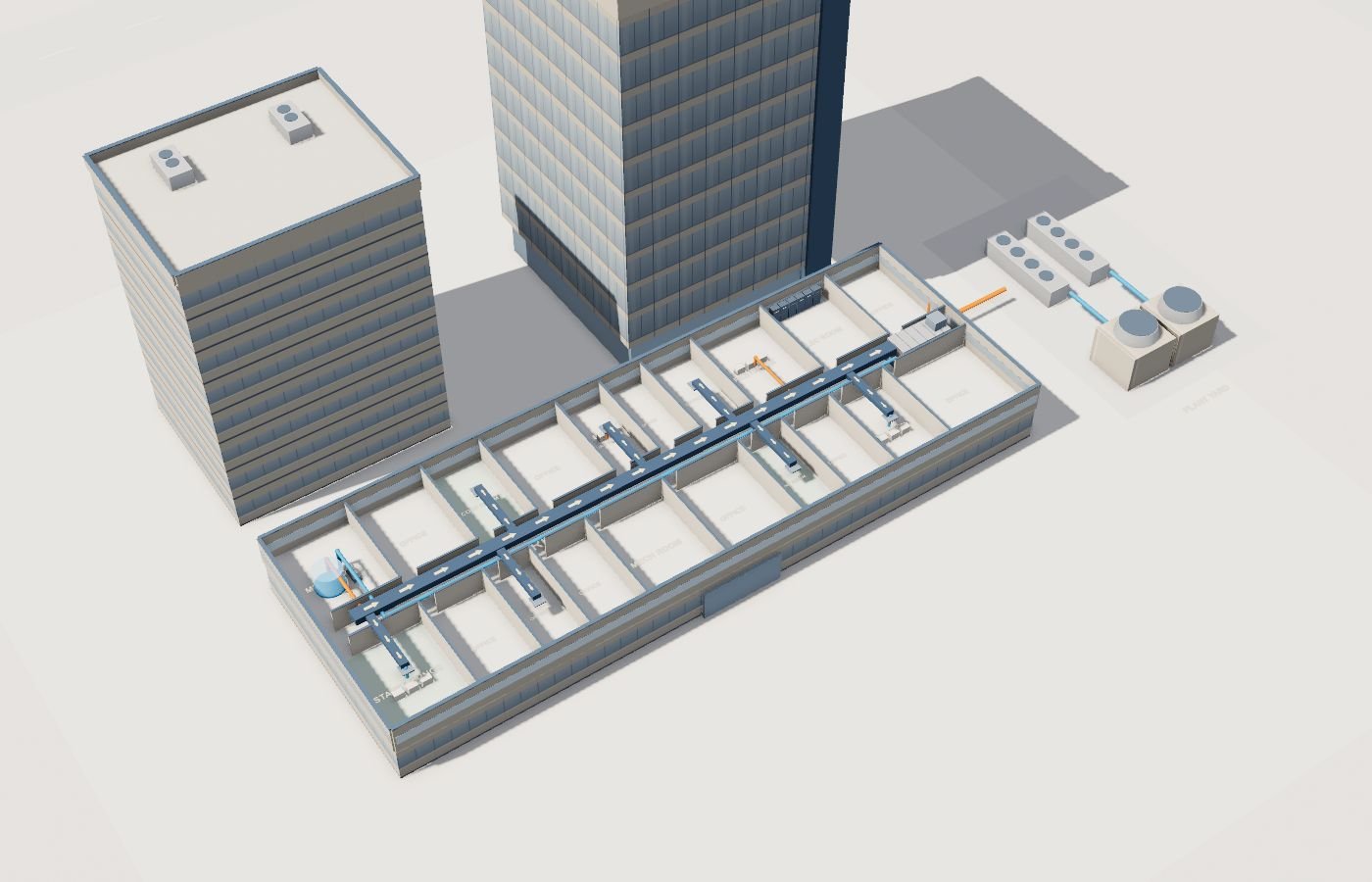
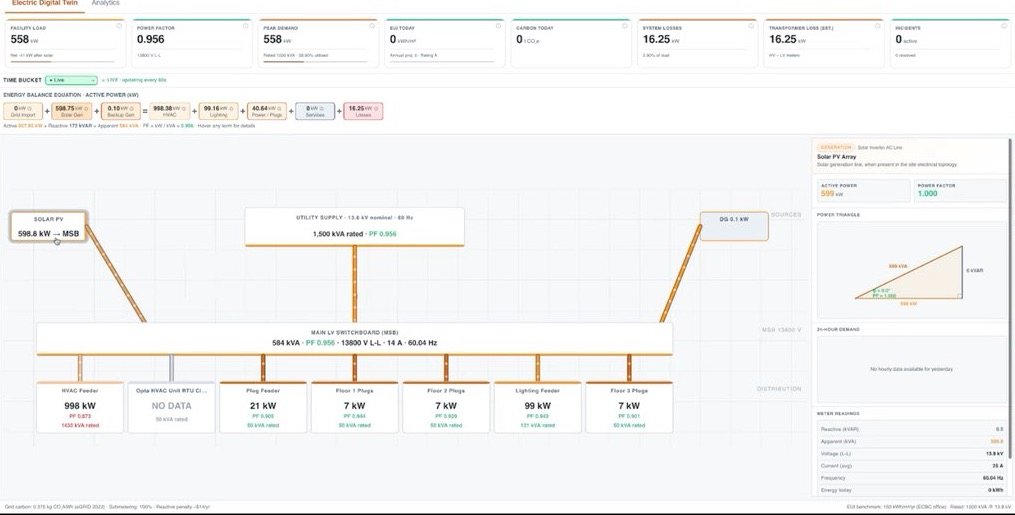
- Live digital twins, built block by block. The water twin solves a balance equation: main supply equals every floor, the fire system, treatment feeds and unaccounted loss. The electrical twin draws the single line from incoming supply to each feeder. Each rooftop unit is modeled down to its dampers, compressor and fans.
- Weather-normalized baselines from day one. Expected use comes from a regression on past consumption plus cooling and heating degree days. Uploading 6 to 12 months of utility bills gives results on the first day, and rate configuration turns the gap into money.
- Real control, with an audit trail. Aqueduct switches simple loads through LoRaWAN relays and works with air handlers, rooftop units, chillers and VAV boxes over Modbus or BACnet, where control is enabled, with owner approval. Occupancy can drive automation, and every command is logged.
Three ways in
Facilities do not start from a blank page. Aqueduct is device agnostic, works over LoRaWAN, Modbus, BACnet, MQTT, M-Bus and pulse outputs, and installation runs through partners.
- Keep your BMS. Aqueduct reads the systems you run and adds what they lack.
- Replace your BMS. Where controls are failing or out of support, Aqueduct can take over.
- Build it in. Architects and MEP engineers can specify Aqueduct for new construction.
What we are not
Clear lines make a platform easier to buy.
- Not a CMMS. Aqueduct sends faults with a recommended fix into the maintenance system you use, then measures whether the fix worked.
- Not SCADA. On water and energy networks, Aqueduct reads network data and control stays with SCADA.
- Not a sensor maker. Partners supply and install devices.
- Not the report filer. Aqueduct supplies measured evidence; you or your consultant file and certify.
Where it runs
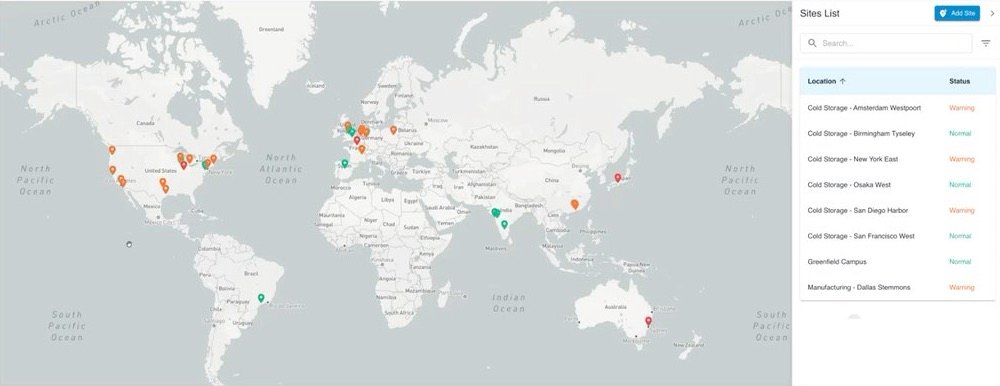
Aqueduct is deployed in 275+ sites across 21 countries. Clients include one of India's top hospital chains, with 22 hospitals and 9 clinics, a commercial real estate portfolio of 20M+ sq ft and major dairy operations, and a top 25 US airport went live in two weeks with 5,000 meter points. We do not name customers without written approval.
Security credentials include ISO/IEC 27001, ISO 9001:2015 and SOC 2 Type 2.